Key Takeaways
- Addressable geo-fencing delivers highly personalized and measurable marketing by targeting individual households or businesses.
- Advancements such as AI integration, context-aware marketing, and privacy protections are setting new standards in location-based advertising.
- Successful adoption of addressable geo-fencing depends on clear audience definitions, impactful content, and continuous optimization.
Understanding Addressable Geo-Fencing
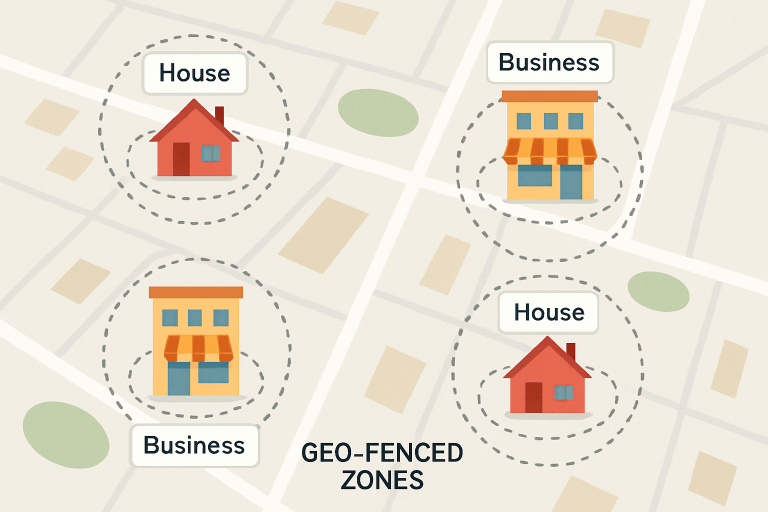
Digital marketing today demands both creativity and precision, as brands continually seek new ways to engage customers in relevant and timely contexts. Addressable geo-fencing is at the forefront of these innovations, allowing businesses to define virtual boundaries around specific physical addresses—such as single-family homes or commercial locations—and serve ad content only to audiences within those boundaries. This focused approach contrasts with previous broad-stroke geofencing applications, delivering a higher probability of reaching people most likely to convert.
Simpli.fi addressable geofencing insightsoffer a deeper understanding of the operational capabilities of this technology, highlighting how brands benefit not only from precision but also from adaptability in their messaging and measurement. Addressable geo-fencing helps marketers in retail, events, healthcare, and local services by targeting real-time behavioral signals. As privacy concerns grow and traditional methods wane, it enables brands to build trust, reduce wasted ad spend, and closely monitor returns. Supporting omnichannel efforts, it links digital and physical spaces, enabling brands to engage consumers where they are most frequently, fostering genuine connections and experiences.
Key Developments in the Geofencing Market
Marketers are using addressable geo-fencing to serve content based on situational data, such as weather, local events, and time of day. This approach creates messaging that resonates and prompts immediate action. Leading campaigns blend geofencing with Augmented Reality (AR) to offer interactive experiences. Addressable geo-fencing is increasingly crucial in healthcare applications, ensuring medical alerts are sent precisely when needed. However, strict privacy laws, such as GDPR and CCPA, are forcing marketers to balance innovation with accountability. AI and machine learning are optimizing geo-fenced campaigns, predicting consumer intent, personalizing offers, and improving results. These advancements are driving increased interest and investment across various sectors, including hospitality, real estate, and public safety. Businesses are also leveraging geofencing data to refine their long-term strategies, identifying high-traffic areas and peak engagement periods. Integration with mobile apps and loyalty programs enhances customer retention by delivering timely, relevant rewards. As technology evolves, addressable geo-fencing is set to become a standard tool for precision marketing, combining regulatory compliance with impactful consumer engagement.
Benefits of Addressable Geo-Fencing
Addressable geo-fencing offers enhanced targeting, enabling marketers to reach the most likely audiences and outperform traditional advertising. This hyperlocal precision yields stronger engagement, higher open and conversion rates, and a measurable ROI. It allows brands to track user engagement, in-store visits, and conversions, offering transparent performance reporting. Tighter targeting reduces waste, optimizing ad spending for maximum impact. Addressable geo-fencing is a transformative tool for data-driven, measurable marketing, making it a valuable tool for marketing strategies. Moreover, it supports personalized messaging, allowing brands to tailor content based on location-specific behaviors or preferences. By integrating with mobile apps and loyalty programs, marketers can foster deeper customer relationships and drive repeat visits. Real-time analytics enable immediate campaign adjustments, improving responsiveness to consumer trends. The data collected can also inform broader marketing strategies, such as product placement or event promotions. Ultimately, addressable geo-fencing combines precision, adaptability, and measurable results, positioning it as an essential tool in modern marketing arsenals.
Future Trends in Addressable Geo-Fencing
AI and machine learning integration are transforming location targeting, enabling more accurate audience segmentation and predictive behavior predictions. Marketers are shifting from broad postal codes to sub-zip code granularity, refining segmentation and campaign adjustments. Privacy-focused business models are being developed, prioritizing consumer choice while delivering relevant advertising experiences. Large publications highlight the growing demand for transparency in location data practices. Addressable geo-fencing is crucial for brands to future-proof their campaigns and maintain relevance. By analyzing historical foot traffic and consumer engagement patterns, AI helps identify the most high-value locations for targeting. Predictive models can anticipate when audiences are most likely to engage, optimizing timing and messaging for maximum impact. Integration with CRM and loyalty platforms allows marketers to personalize campaigns based on past behavior and preferences. Automated reporting provides real-time insights, enabling rapid adjustments to underperforming campaigns. Ultimately, combining AI with geo-fencing ensures marketing efforts are both efficient and highly relevant, driving stronger ROI and deeper customer connections.
Implementing Addressable Geo-Fencing in Your Marketing Strategy
To create effective geo-fencing campaigns, start by identifying the exact addresses or locations of your target audience and aligning these with your campaign objectives. Develop persuasive, relevant content that speaks directly to your audience’s needs and desires, using local language, neighborhood events, or location-specific offers to engage with them effectively. Utilize real-time analytics to track campaign effectiveness and adjust targeting, creative, or frequency dynamically to maximize performance. These steps ensure the creation of relevant and effective geo-fencing campaigns, supporting sustained marketing success. Additionally, integrating mobile push notifications or in-app messages can enhance engagement by delivering timely prompts when users enter the designated area. Testing different messaging strategies and creatives helps determine which approach resonates most with the audience. Ultimately, combining geofencing data with broader marketing insights enables the creation of more personalized campaigns that drive both conversions and long-term customer loyalty.
Conclusion
Addressable geo-fencing is transforming the future of location-based marketing. Its unrivaled capacity for precise targeting, combined with real-time analytics and privacy-first methodologies, offers marketers powerful new ways to connect with consumers where it matters most. As the market evolves, the integration of artificial intelligence and privacy innovations will further reinforce the effectiveness and trustworthiness of these campaigns. Brands that recognize and invest in addressable geo-fencing today will be best positioned to thrive as consumers seek both convenience and control in their digital experiences.