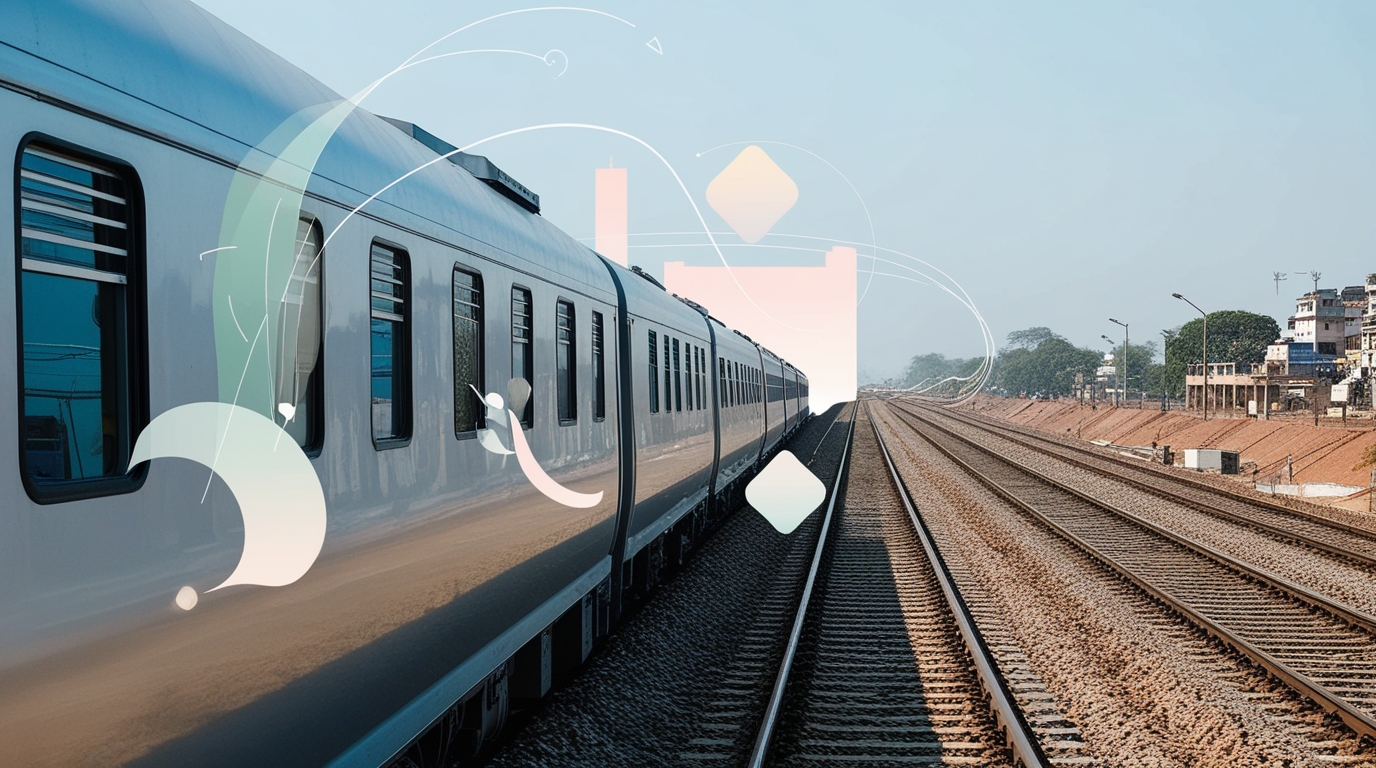
The indian railway network, one of the largest and most complex transport systems in the world, is a driving force behind the country’s economic and social development. With expansive connectivity, a rising focus on modernisation, and strong government support, the sector continues to evolve rapidly. The Indian Railways plays a crucial role in facilitating passenger mobility, freight transport, and national integration.
A Strong Foundation with Distinct Advantages
India’s railway ecosystem stands on four key advantages that support its long term growth and relevance.
Demand Advantage
India has a massive population and a widespread need for efficient transportation. The railway network caters to millions of passengers daily, meeting both short-distance and long-distance requirements. With rising urbanisation and population growth, the demand for reliable and affordable transport continues to increase.
Attractive Opportunities
There is significant potential for expansion across high speed corridors, freight services, suburban networks, and modern station development. Initiatives to introduce faster trains, upgraded technologies, and improved passenger facilities are creating new opportunities for investment and innovation.
Policy Support
Government policies continue to encourage modernization, electrification, capacity expansion, and safety improvements. Structural reforms, budget allocations, and focused commitments towards upgrading infrastructure strengthen the sector and improve operational efficiency.
Competitive Advantage
India’s extensive railway system covers vast regions, both urban and rural. This broad coverage enables access, mobility, and economic activity across the country. The network connects remote areas with major cities, supporting trade and regional development.
Sector Overview
Indian Railways operates one of the world’s largest transportation systems, providing a cost effective and widely accessible mode of travel. The sector is committed to scaling both passenger and freight services through continuous modernization.
Recent years have seen a shift towards advanced technologies, improved safety systems, and enhanced passenger experience. Introduction of modern trains, upgraded stations, and digital ticketing systems reflects the transition towards a more contemporary and efficient railway ecosystem.
Electrification of railway routes has accelerated significantly, reducing fuel costs and improving sustainability. Indian Railways is also actively working on freight modernization to improve the efficiency of cargo movement and to support economic growth.
Market Size and Growth Outlook
The market size data highlights steady growth in revenue generation for Indian Railways. Passenger traffic is increasing, supported by rising mobility needs and improved travel experience. Freight services continue to make a strong contribution, transporting essential commodities such as coal, cement, agricultural goods, and industrial materials.
Investments in dedicated freight corridors are expected to enhance speed, capacity, and efficiency of cargo movement. Modern rolling stock, better terminals, and stronger logistics infrastructure are boosting operational performance across the network.
Investments and Key Developments
Several major developments reflect the sector’s ongoing transformation:
- Expansion of electrified routes across multiple states.
- Introduction of new generation trains including semi high speed models.
- Enhancement of safety systems with advanced signalling technologies.
- Upgradation of station facilities to improve passenger comfort.
- Increased private sector participation in various railway projects.
- Development of freight corridors and logistics hubs to strengthen goods movement.
- Digitization of ticketing, customer services, and operational processes.
These developments showcase India’s commitment to creating a modern railway system that can compete globally and efficiently meet rising mobility demands.
Government Initiatives
Strong government initiatives continue to support the transformation of the indian railway network. Key focus areas include:
- Improved track infrastructure and construction of new lines.
- Large scale electrification projects to reduce operational costs and carbon footprint.
- Capacity expansion across high density routes.
- Adoption of new technologies including automatic train protection systems.
- Upgradation of platforms, waiting areas, and on board amenities.
- Financial support for station redevelopment and integrated transport hubs.
- Efforts to reduce travel time on key routes and improve punctuality.
- Emphasis on green initiatives and sustainable transport solutions.
These measures aim to make Indian Railways safer, faster, and more efficient for passengers and freight users.
Road Ahead
The future of the indian railway network looks highly promising. With strong policy support, large scale investments, and technological upgrades, the sector is moving toward a world class transportation system. Development of high speed corridors, modernization of stations into commercial hubs, and expansion of freight capabilities will significantly improve overall performance.
As India’s economy grows, the need for stronger transport connectivity will rise. Indian Railways is expected to play an even more critical role in supporting trade, mobility, and economic development. Continued investments in digital systems, safety upgrades, and infrastructure expansion will shape a more efficient and sustainable railway ecosystem.