Introduction
When a bedroom feels calm and organised, it is often because the main furniture pieces work well together. A room can have beautiful furniture, but if the pieces look disconnected from each other the space may still feel unfinished. This is especially true in the bedroom where large furniture occupies most of the visual space.
The bed and the wardrobe usually stand out more than anything else in the room. A modern bed design often becomes the centre of attention, while the wardrobe for bedroom covers a large part of the wall and remains constantly visible. Because both pieces are so prominent, their design and finish influence the overall atmosphere of the space.
When the two look comfortable together, the room feels more balanced. The furniture appears intentional rather than randomly placed. Even simple interiors can look thoughtful when the bed and wardrobe share a sense of connection through colour, material, or design style.
The goal is not to create identical furniture. Instead the aim is to make sure both pieces belong naturally in the same room.
The role of bed design in shaping the bedroom
In most bedrooms the bed naturally becomes the first thing people notice. Its position in the centre of the room and its size make it the visual anchor of the space. Because of this, the design of the bed often influences the rest of the furniture choices.
A modern bed design usually focuses on simplicity and comfort. Some beds feature clean wooden frames that highlight the natural texture of wood. Others include padded headboards which bring softness to the room and make sitting up in bed more comfortable.
The headboard often shapes the character of the bedroom. A wooden headboard can bring warmth and a sense of stability. Upholstered headboards create a more relaxed feeling and may add a touch of softness to the space.
Material choice also affects how the room feels. Wooden beds remain popular because they last long and fit easily into many types of interiors. The natural grain of wood also gives the furniture a sense of authenticity that many people appreciate.
The size of the bed must suit the room. A very large bed in a compact bedroom may leave little space for movement. On the other hand a small bed in a large room may feel out of proportion. Choosing a bed that fits the room allows the rest of the furniture to settle comfortably around it.
Choosing wardrobe finishes that relate to the bed
After the bed is selected, attention often shifts to the wardrobe. A wardrobe for bedroom serves an essential function in everyday life, but it also plays an important visual role because of its large surface area.
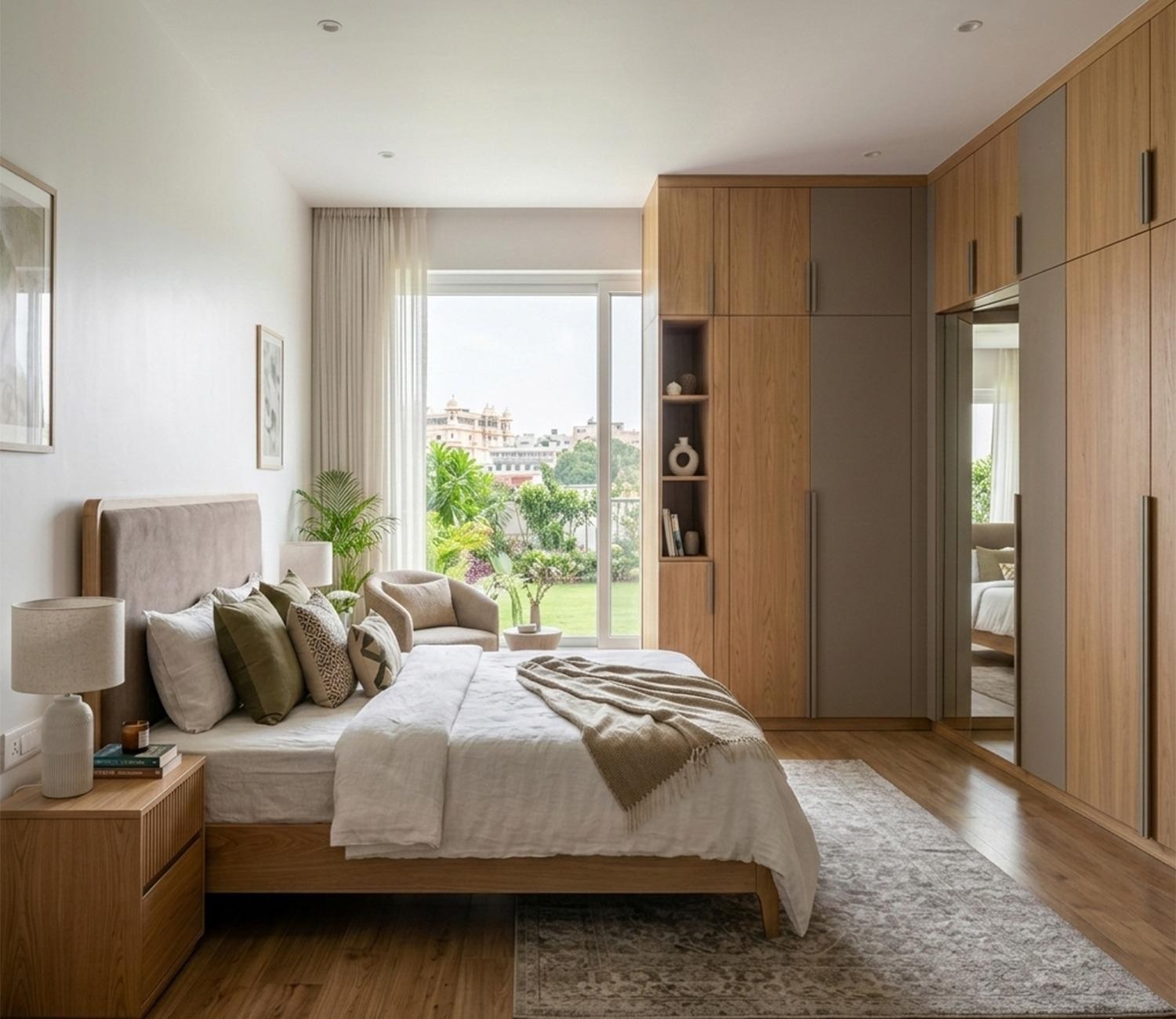
One way to create a sense of unity is by paying attention to finishes. If the bed features natural wood tones, a wardrobe with a similar shade of wood can create a quiet visual connection. The pieces do not need to match exactly, but they should feel comfortable next to each other.
Textures also influence the appearance of the furniture. Smooth wooden surfaces, subtle grain patterns, or matte finishes can all shape how the wardrobe looks in the room. When the material quality relates to the bed frame, the furniture begins to feel part of the same arrangement.
Colour choice is another factor. Light wood shades often suit smaller bedrooms because they reflect light and make the room feel open. Darker finishes can work well in larger spaces where deeper tones add richness to the environment.
A wardrobe that relates well to the bed helps the room appear more organised. The furniture looks chosen with care rather than placed together by chance.
Creating balance through furniture placement
Design and finish are important, but placement also affects how the room functions. The bed and wardrobe should be positioned in a way that allows comfortable movement through the space.
Beds are usually placed against the central wall of the room so that both sides remain accessible. This arrangement makes daily use easier and allows bedside tables to sit comfortably beside the bed.
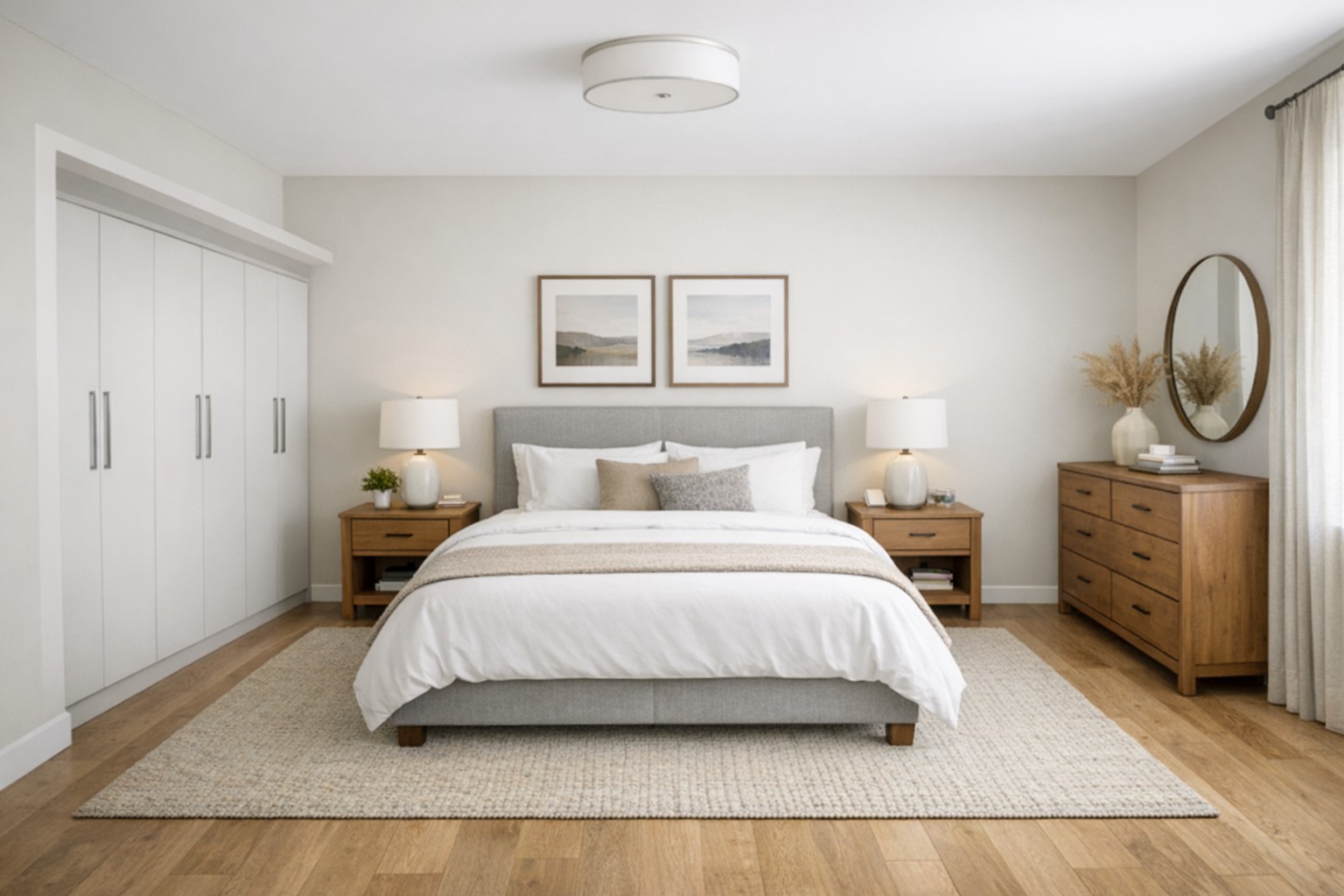
The wardrobe often occupies the wall opposite the bed or the longest wall in the room. This position allows the wardrobe doors to open easily while keeping walking paths clear.
Spacing around the furniture matters as well. When there is enough room to walk around the bed and stand in front of the wardrobe, the bedroom feels open and practical.
Visual balance is another detail worth considering. When large furniture pieces are distributed thoughtfully across the room, the space appears calm and well arranged.
Bringing the room together with colour and decor
Once the main furniture pieces are in place, smaller details help connect everything in the room. Bedding, curtains, and rugs often play a quiet but important role in tying the space together.
Bed linens can reflect colours that appear in the wardrobe finish or surrounding furniture. This subtle repetition of colour helps the room feel consistent without making the design look forced.
Curtains also influence the mood of the bedroom. Soft fabrics and calm colours often support the relaxed environment that most people want in a sleeping space.
Rugs placed near the bed introduce texture and comfort underfoot. They also visually connect different areas of the room and make the space feel warmer.
Lighting deserves attention as well. Bedside lamps create a soft glow that highlights the textures of the bed and wardrobe. Gentle lighting in the evening can make the room feel peaceful and comfortable.
Decorative items should remain simple. A few framed photographs, a plant, or a small piece of artwork often adds personality without overwhelming the room.
Conclusion
A bedroom begins to feel settled when its main furniture pieces work together naturally. The modern bed design and the wardrobe for bedroom play the largest role in shaping how the space appears.
When their materials, finishes, and proportions feel compatible, the room becomes more pleasant to look at and easier to use. Thoughtful placement allows movement around the furniture while keeping the layout balanced.
Small additions such as bedding, rugs, lighting, and simple decor can further support this connection. When these elements come together, the bedroom becomes a place that feels calm, organised, and comfortable for everyday living.