Insert molding injection is a powerful manufacturing technique that allows plastic and metal components to be combined into a single, high-performance part. By molding plastic directly around a pre-placed insert, manufacturers can eliminate secondary assembly, improve structural strength, and achieve more compact and reliable product designs. This process is widely used in automotive, medical, electronics, and industrial applications.
This guide provides a clear, practical overview of how to master insert molding injection projects—from design and material selection to production control and quality assurance.
What Is Insert Molding Injection?
Insert molding, provided by LZ tooling, is a variation of injection molding in which a metal or plastic insert is placed into the mold cavity before molten plastic is injected. Once the plastic cools, the insert becomes permanently encapsulated inside the molded part.
Typical inserts include:
- Threaded metal bushings
- Electrical terminals and pins
- Reinforcement plates
- Wear-resistant components
The final result is a single molded part that combines the strength or conductivity of the insert with the flexibility and insulation of plastic.
Why Choose Insert Molding?
Insert molding offers several advantages over traditional post-assembly methods.

Stronger Mechanical Bond
Plastic flows around the insert, creating a mechanical lock that resists pull-out, vibration, and torque far better than adhesives or press-fit solutions.
Lower Assembly Cost
By integrating inserts during molding, manufacturers remove additional fastening, welding, or bonding steps—reducing labor, cycle time, and error rates.
Improved Product Reliability
Fewer parts and joints mean fewer failure points, which is critical for high-load or high-use applications.
Compact and Functional Designs
Insert molding allows multiple functions to be combined into one component, supporting miniaturization and cleaner product layouts.
Insert Molding vs Overmolding
Although often confused, insert molding and overmolding serve different purposes.
- Insert molding embeds a solid insert into plastic to provide strength, threads, or electrical function.
- Overmolding adds a second plastic or elastomer layer over an existing molded part, typically for grip, sealing, or comfort.
Insert molding focuses on structure and functionality, while overmolding focuses on ergonomics and protection.
Insert Molding Injection Process Overview
A successful insert molding project follows a controlled and repeatable workflow.
Step 1: Insert Preparation
Inserts must be clean and free of oil, oxidation, or debris to ensure proper bonding and part quality.
Step 2: Insert Placement
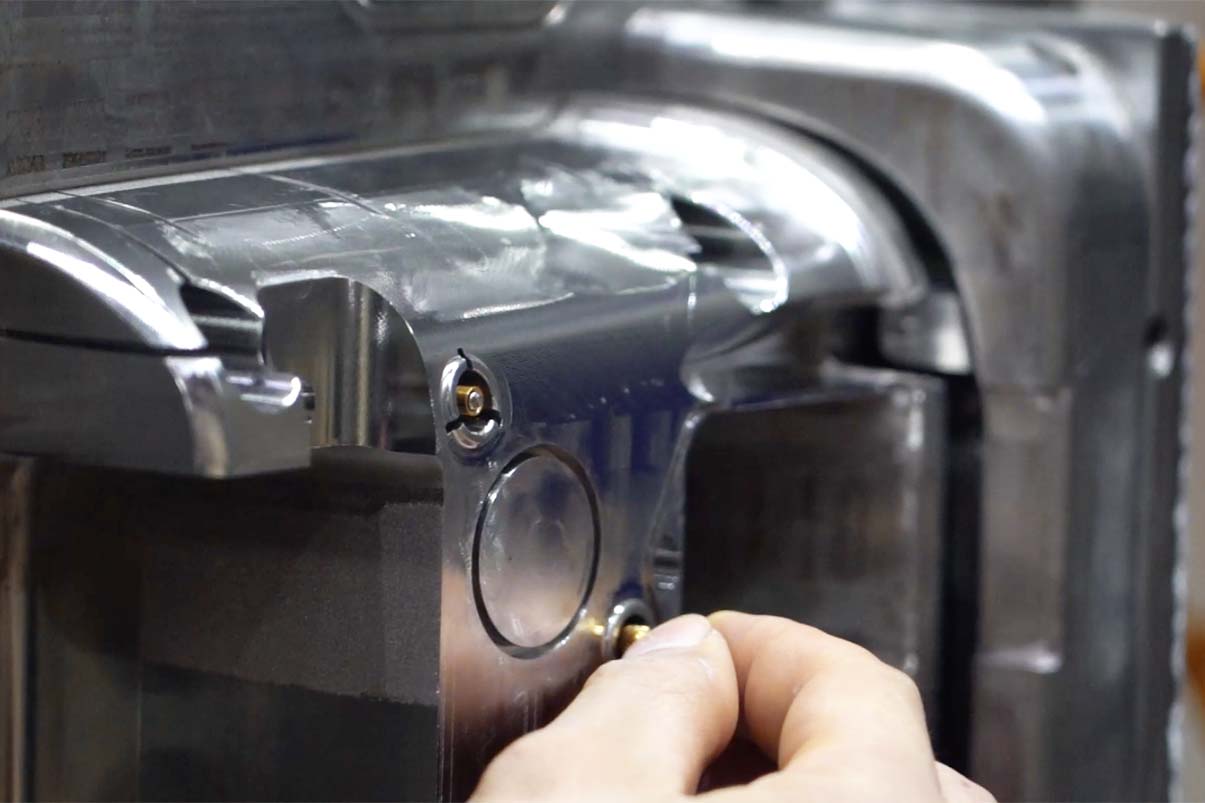
Inserts are positioned in the mold cavity manually or using automation. Accurate placement is critical to avoid misalignment or defects.
Step 3: Plastic Injection
Molten plastic is injected into the mold, flowing around the insert and filling the cavity.
Step 4: Cooling and Solidification
The plastic cools and solidifies, locking the insert securely into place.
Step 5: Part Ejection and Inspection
Finished parts are ejected and inspected for dimensional accuracy, insert retention, and surface quality.

Material Selection for Insert Molding Projects
Material compatibility plays a major role in insert molding success.
Common Insert Materials
- Brass (excellent for threads)
- Stainless steel
- Carbon steel
- Aluminum
- Copper alloys
Common Plastic Resins
- ABS – good strength and surface finish
- Nylon (PA6, PA66) – high mechanical strength
- Polycarbonate (PC) – impact resistance
- PBT – dimensional stability and electrical insulation
- PPS and PEEK – high temperature and chemical resistance
Designers must account for different thermal expansion rates between metal and plastic to prevent cracking or loosening.
Design Best Practices for Insert Molding
Good design reduces defects and improves long-term performance.
Enhance Insert Retention
- Use knurling, grooves, or undercuts
- Avoid smooth, cylindrical insert surfaces
Maintain Uniform Wall Thickness
- Ensure consistent plastic thickness around inserts
- Prevent sink marks, warping, and voids
Allow for Thermal Expansion
- Avoid rigid plastic encapsulation in high-stress areas
- Use compliant resin grades when necessary
Design for Manufacturability
- Avoid sharp corners and stress concentrators
- Ensure proper draft angles for mold release
Plan for Automation
For high-volume production, design inserts and tooling to support robotic loading.
Common Insert Molding Applications
Insert molding is used across many industries.
Automotive
- Threaded housings
- Sensor components
- Electrical connectors
Electronics
- Terminal blocks
- Switch components
- Power and signal connectors
Medical Devices
- Surgical instrument parts
- Diagnostic device housings
- Implantable components
Industrial Equipment
- Reinforced knobs and handles
- Structural fasteners
- Wear-resistant assemblies
Typical Challenges and Solutions
Insert Shifting During Injection
Solution: Use mold features, magnets, or mechanical locks to secure inserts.
Weak Bonding or Pull-Out Failure
Solution: Improve insert surface texture and optimize injection parameters.
Warping or Cracking
Solution: Balance wall thickness, adjust cooling rates, and select compatible materials.
High Tooling Cost
Solution: Perform DFM analysis early and optimize mold complexity before tooling begins.

Quality Control in Insert Molding Injection
Consistent quality requires robust inspection and testing.
- Dimensional inspection using calipers or CMM
- Torque and pull-out testing for insert retention
- Visual inspection for flash and voids
- Functional testing for mechanical or electrical performance
For regulated industries, insert molding projects often follow ISO 9001 or ISO 13485 quality systems.
Final Thoughts
Insert molding injection is a proven solution for producing strong, reliable, and cost-effective plastic components with integrated inserts. Mastering this process requires careful attention to material selection, part design, tooling, and process control.
When properly executed, insert molding eliminates assembly steps, improves durability, and enables advanced product designs across automotive, medical, electronics, and industrial applications. For manufacturers seeking high-performance, integrated components, insert molding remains one of the most efficient injection molding techniques available.