Key Takeaways
- AI-driven predictive dialers optimize outbound call campaigns by using data-driven automation and personalization tactics.
- CRM and omnichannel integrations are key for contextual, seamless customer interactions.
- Real-time conversation intelligence boosts agent performance through dynamic support and feedback.
- Voice cloning expands the potential for tailored and branded customer interactions.
- Stringent ethical practices and compliance with evolving regulations are crucial for the sustainable deployment of AI.
Artificial Intelligence (AI) is rapidly transforming the way businesses interact with customers, especially in the domain of outbound calling and sales engagement. As predictive dialers evolve, AI enables call centers and sales teams to reach more customers, increase efficiency, and personalize every call experience. These innovations are at the core of the new wave of AI dialer solutions now shaping the customer engagement landscape.
Next-generation predictive dialers leverage AI to enhance customer engagement through real-time recommendations, intelligent call routing, and CRM integration. They improve contact rates and agent productivity while presenting compliance and ethical challenges. Understanding their role in omnichannel strategies allows businesses to optimize performance and maintain regulatory trust.
Advancements in AI-Powered Predictive Dialers
Today’s predictive dialers harness machine learning to dynamically adjust call strategies by analyzing patterns in agent performance, customer profiles, and historical results. AI models power decision-making, so instead of relying on static algorithms, modern dialers learn in real time—reducing agent idle time and maximizing live contacts. For instance, by monitoring call pickups and responses, the dialer can fine-tune pacing, minimize customer hang-ups, and optimize the outcomes of every campaign.
AI-driven systems also manage call distribution more intelligently. They route contacts based on agent expertise, past outcomes, or even sentiment analysis. Such adaptability leads to higher connection rates and a measurable increase in agent productivity, providing organizations with a competitive edge in industries where speed and personalization are crucial.
Integration with CRM and Omnichannel Communication
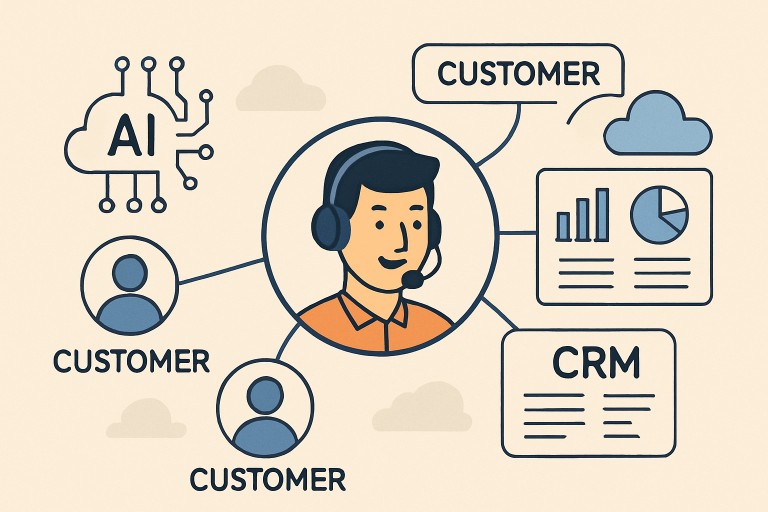
Seamless integration between AI dialers and CRM software ensures that agents have instant access to complete customer histories, enabling them to have contextualized conversations. This means agents can deliver personalized greetings, anticipate needs, and provide more relevant solutions—all directly informed by real-time access to CRM data.
Omnichannel capabilities enable predictive dialers to integrate with other communication channels, including email, SMS, chat, and more. This creates a unified record of each customer interaction, allowing teams to follow up across preferred channels. Companies embracing these strategies are experiencing improved engagement and high customer loyalty, a trend highlighted in recent reports from industry leaders such as ADA. Leveraging AI-driven insights also helps identify patterns in customer behavior, enabling proactive outreach and engagement. As a result, businesses can optimize campaigns, reduce churn, and maximize lifetime customer value.
Real-Time Conversation Intelligence
One of the most exciting developments in predictive dialer technology is real-time conversation intelligence. AI now analyzes calls as they happen, providing agents with actionable prompts, next-best actions, and even live objection handling. Sentiment analysis tools detect changes in tone or emotion, enabling team leads to intervene instantly or adapt strategies mid-call.
These capabilities help boost conversions, support quality assurance efforts, and drive continuous improvement in agent training. Organizations with robust conversation intelligence systems see measurable reductions in average call handling times and increases in customer satisfaction metrics.
Voice Cloning and Personalization
Voice cloning technology adds a new layer of personalization and branding to customer calls. AI can generate distinct, tailored agent voices—ensuring calls resonate with specific demographics or align with core brand identities. For example, a healthcare provider engaging with an elderly population may deploy a reassuring, empathetic tone, while a fintech startup could choose a more energetic and innovative one. Personalized experiences lead to stronger rapport, higher conversion rates, and improved loyalty.
Compliance and Ethical Considerations
As AI gains influence over call strategies and customer data handling, the need for strict compliance grows. AI-powered predictive dialers must comply with all applicable regulations, including the General Data Protection Regulation (GDPR), the Telephone Consumer Protection Act (TCPA), and similar local mandates. Incorporating privacy-by-design into development and deployment ensures organizations avoid costly penalties and damage to their reputation.
Ethical AI deployment also entails maintaining transparency regarding automation and decision-making processes. Businesses should provide clear communication to customers about their involvement with AI, protect sensitive information, and regularly audit their AI models to prevent bias.
Conclusion
The rise of AI-powered predictive dialers is ushering in a new era in customer engagement—one where automation, real-time intelligence, and personalization collaborate to drive results. By focusing on integration, compliance, and continuous improvement, organizations can transform their call operations and deliver exceptional customer experiences on a large scale.