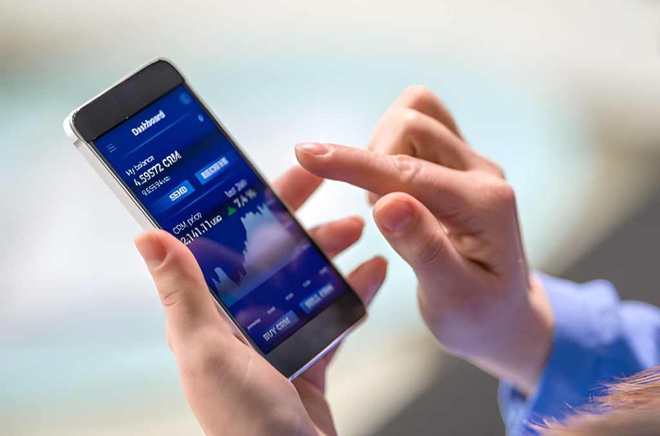
Trading on mobile apps is not a new concept. With the Dhaka Stock Exchange (DSE) reporting a 26% growth in mobile app stock transactions in 2024, the trend is obvious and evident. The trading community in Bangladesh has adopted mobile platforms for regular strategies.
Beyond stocks, today’s smartphone applications allow traders to trade all kinds of assets. From cryptocurrencies, foreign currencies, and ETFs to commodities, and from regular accounts to margin, a trader doesn’t go out of options when operating from mobile apps.
If you are someone seeking to know whether mobile trading would be a good choice or not, this article will help you by broadening your knowledge.
What is Mobile Trading?
The term may sound new, but mobile trading is not much different from desktop trading. You get a mobile application from your broker, which resembles your familiar browser or desktop trading platform in features and functionalities. Except for the specialized design tailored for small screens.
More to portability, letting you trade on the go, mobile trading platforms offer flexibility. Simple in navigation, straightforward in interactions, cross-channel in payments, and synchronizable between devices, these platforms are the next-level trading instruments. And given their increasing popularity, it won’t be an exaggeration to mark them as future trading solutions.
Current Statistics on Mobile Trading
Ask a serious trader in Bangladesh, and he will tell you he has a running account on the Dhaka Stock Exchange (DSE). Most of them are trying their luck out there on DSE-indexed assets. In 2024, their total annual turnover reached BDT 1.486 trillion. And it may stun you knowing that about BDT 214.3 billion of it was earned through mobile apps.
And it’s just the local share market. With online trading becoming prevalent, Bangladeshi traders are now fishing internationally. And unlike in the old days, they don’t have to sit all day long, reeling out for uptrends and reeling in to reorient. Because they can do those things on the move, from a mobile trading setup, called mobile applications.
So now let’s answer your questions on whether you can benefit from mobile trading or not.
Advantages of Mobile Trading
Like any new technology, the mobile applications got the attention of the general users by solving unique problems. With time, it has grown in features and capacity to run complex and large applications. The benefits have been outrageous. And among all the industries that got showered in those benefits, trading is one.
Let’s explore how mobile trading has made the exchange market more bustling than ever:
New Entries: With about 185 million mobile connections in Bangladesh, more traders are starting out with their handphones. The need for a big, costly setup is not there, opening opportunities to risk takers.
Portability: Smartphones are bridging the gap between mobility and flexibility, outruling laptops. To get just a quick peek at trends, you don’t need to carry a 15’’ expandable device in a backpack, looking for a perfect place to create a mini setup outside the home. With mobiles, it’s all about sweeping and swashing of your thumbnail.
Instant Alert: Aren’t those instant alerts on the market movements a new risk management instrument? Think of it, and you will realize the real worth of those constantly streaming notifications, warning of the price fluctuations of your subscribed assets.
Payouts: Mobile applications can also work as payment gateways. The features you could only get on a desktop environment are now in your pocket. Be it a merchant, a bank, or a third-party local vendor transaction, withdraw cash regardless of where you are.
Limitations of Mobile Trading
About any technology, it’s also true that there is no one-size-fits-all. There are always a couple of limitations to compromise. When trading on smartphones, Bangladeshi traders need to consider:
Smaller Screens: Traders with a long habit of working on large monitors may find mobile screens hard to navigate. Especially when executing short-term trades that require switching between multiple windows, analyzing the market in real-time, and monitoring the slightest price drift.
Network Coverage: Bangladesh has come past the time when cellular networks were urban-only. However, the same can’t be said about remote and hillside locations, with major operators failing to keep a consistent network flow. So, traders on the go and locals still can’t rely on smartphones for serious trading.
Wrapping Up
With the majority of people attending the digital world through smartphones, it’s only rational that digital marketplaces will take a heavy hit. Measuring the nominal limitations against the massive reward pool, you won’t be wrong to assume that the hit will only boost the market situation, instead of downsizing it. Even if you can’t take mobiles as your sole trading companion, you can’t ignore how adding them to your usual setup will enrich your trading experience.