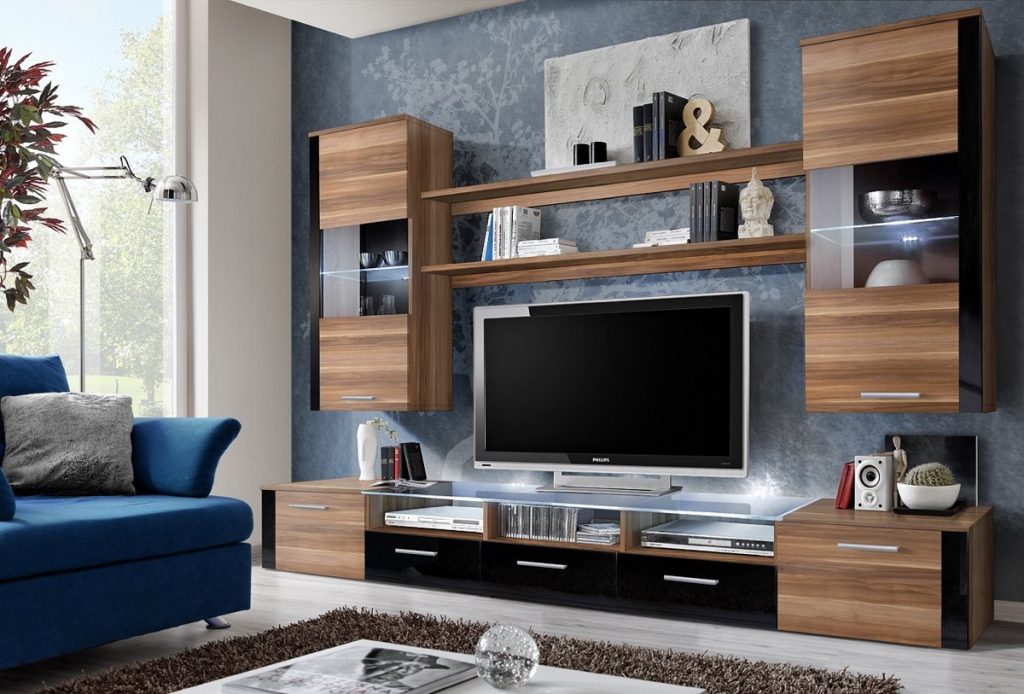
Five years ago, a big screen was enough. Nobody was overthinking the seating or worrying about what the TV unit looked like. That has changed quite a bit. People want the full experience now. Sound that actually fills the room, recliners you sink into and do not want to leave, and a TV unit that looks like it belongs there rather than something that was just pushed under the screen and forgotten about.
The recliners and the TV unit are what make or break a home theatre setup. Everything else is secondary.
Here’s what’s actually trending right now.
1. Curved Recliner Layouts
Lining recliners up in a straight row against the wall is the obvious move. It also looks terrible in practice. There’s something about a flat row of seats facing a screen that feels more like a waiting room than a place you’d want to spend an entire evening.
A curved layout fixes this without much effort. The recliners angle naturally toward the screen, so every seat gets a decent view. Nobody’s twisting sideways or leaning around the person next to them. The room starts feeling like it was actually designed for watching rather than just a room where someone pointed chairs at a screen.
The setup is simple enough. Centre the TV unit on the wall and let the recliners fan out from there on both sides. It’s a small shift in thinking, but the difference in how the room feels is pretty significant.
2. TV Units That Hide Everything
Open shelving under a screen used to be completely normal. Cables trailing down, set-top boxes sitting out in the open, remotes lined up along the edge. It worked fine, but it was never particularly nice to look at. In a room where the screen is supposed to hold all the attention, a messy TV unit is a constant distraction.
What people are moving toward now is TV units with closed cabinets and proper compartments for equipment. Cable management is built into the unit, so nothing is hanging loose at the back. The whole setup stays clean, and nothing is on show that doesn’t need to be.
When the TV unit looks considered and tidy, the screen above it can actually do its job. And the recliners in front of it feel like part of something put together with real thought rather than chairs sitting in front of a wall full of wires.
3. Layered Lighting
Most people sort the recliners, sort the TV unit and then just leave the existing ceiling light in place. It’s the one thing that makes the biggest difference and gets skipped most often.
A single overhead light in a home theatre space is too bright and too flat. It works against the screen, kills any atmosphere the room might have had and makes long viewing sessions more draining than they need to be.
Layered lighting is the better approach. Something soft behind the TV unit, a warm light source near the recliners, maybe low strips along the floor edges of the room. Nothing harsh, nothing pointing directly at the screen.
Bias lighting is worth trying if you haven’t. It’s a soft strip that runs behind the TV unit along the wall. It cuts down eye strain during long sessions and makes the picture on the screen look noticeably better. Sitting in a recliner in a warmly lit room feels genuinely different from sitting under a single ceiling bulb. It’s hard to explain until you’ve experienced it.
4. Small Room Setups That Actually Work
Most people don’t have a dedicated home theatre room. A corner of the living room or a medium-sized bedroom is what they’re actually working with. Some of the most practical and well-thought-out setups are coming out of exactly these kinds of spaces.
Wall-mounting the TV unit is the single biggest change you can make in a smaller room. It clears the floor, removes the bulk of a standing unit and keeps all the focus on the screen and the recliners. Two recliners angled slightly toward each other with a wall-mounted TV unit centred between them works really well in a regular room without feeling like the space was turned upside down to make it happen.
The recliners don’t need to be oversized either. Comfortable and at the right distance from the screen is what actually matters.
That distance is something worth getting right before buying. Too close, and the picture feels overwhelming. Too far, and a large screen stops feeling large. For most home setups, somewhere between eight and twelve feet tends to work well.
A home theatre that genuinely delivers isn’t about spending the most on the screen or getting the most feature-packed recliners. It’s about the recliners, the TV unit, the lighting and the room feeling like one considered setup rather than four separate things that ended up in the same space.