For a long time, football in India lived in the shadow of cricket, surviving on regional passion, old clubs, and loyal fan bases. That picture has changed quickly, and Indian Football’s Growth: Can ISL Compete with Cricket Popularity? is now a real question rather than a fantasy.
Indian Football’s Growth: Can ISL Compete with Cricket Popularity? Quick Answer
Yes, but only partly. The ISL has helped football grow fast in India through city-based teams, stronger attendance, and digital visibility, but cricket still remains the country’s biggest sport by overall reach and habit.
Why football’s rise in India feels different now
Football in India is not a new trend. It has a history of more than 150 years, and one of the country’s oldest competitions, the Durand Cup, dates back to 1888.
That long history matters because football already had roots before the modern league era arrived. Mohun Bagan, formed in 1889, became a major symbol of Indian football and was the first Indian team to win the IFA Shield before independence. Still, for many years the sport lacked a clear national pathway, so it stayed strong in certain regions without becoming a true all-India obsession like cricket.
Important signs of growth before the ISL
The story did not begin in 2013. There were earlier moments that gave Indian football credibility and hope.
One of the biggest was India qualifying for the 1950 FIFA World Cup in Brazil. Much later, the late 2000s brought another encouraging phase. In August 2007, India won its first Nehru Cup by beating Syria 1-0 in the final. In August 2008, the team won the AFC Challenge Cup, and in 2009 India again beat Syria in the Nehru Cup final. These wins did not suddenly put football above cricket, but they reminded fans that Indian football could still produce meaningful moments.
For beginners, this is an important point. Sports popularity grows through emotion as much as results.
How the ISL changed the conversation
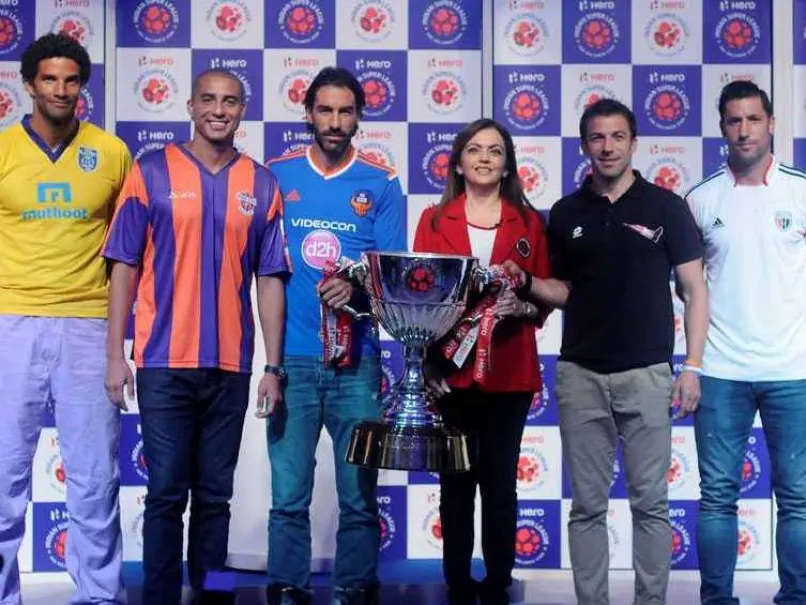
The Indian Super League, established in 2013, gave football in India something it badly needed: a modern, visible, easy-to-follow structure. Instead of the sport feeling scattered, the ISL made it simpler for casual viewers to choose a team, follow a season, and stay connected.
The biggest smart move was making teams feel tied to cities. That sounds simple, but it changed a lot. Fans were no longer just watching football as neutral spectators; they were backing their city and building a local identity around the club. Matches started to feel like events, players became more visible, and football entered mainstream sports conversations in a way it had struggled to do before. Even people who casually follow sports apps or download 1xbet to keep an eye on fixtures and odds can see that ISL games now sit much more naturally in India’s wider sports culture.
The scale of that growth is hard to ignore. The ISL has 155 million followers in India and ranks as the fifth biggest football league in the world by average spectator attendance. Only the Bundesliga, Premier League, La Liga, and Serie A are ahead of it on that measure, while it stands above MLS, Ligue 1, and Liga MX.
The 2017 tournament that changed football’s image
If one event showed that football could draw huge crowds in India, it was the 2017 FIFA U-17 World Cup. The tournament attracted more than 1.3 million spectators and broke previous attendance records.
That was not just a nice headline. It helped improve infrastructure, gave organisers practical experience in running major football events, and pushed football further into the national spotlight. It also helped create momentum for India to host the FIFA U-17 Women’s World Cup in 2020. For a country trying to grow a sport, these things matter because they leave behind systems, venues, and confidence.
So can ISL really compete with cricket?
Yes, but not in the same way and not on the same scale.
Cricket still has the broadest emotional hold in India. It reaches across generations, across households, and across everyday life in a way no other sport currently does. Football is growing fast, but growth is not the same as dominance. The ISL can compete for younger audiences, urban attention, digital engagement, and club-based loyalty. It cannot yet match cricket’s overall cultural power.
That said, the gap is not fixed forever. India has moved from being seen as a mostly single-sport nation to a more varied sports market. Football benefits from rising smartphone use, lower data costs, and the fact that online sports viewing is now normal rather than niche. For a sport that thrives on clips, highlights, player personalities, and weekly league drama, that digital shift is a huge advantage.
What is helping football grow right now
- City-based teams that make fandom easier for new viewers
- Strong matchday interest and healthy attendance in the ISL
- Growing digital viewing on phones and online platforms
- More visibility for Indian players and their personalities
- Grassroots outreach from global clubs such as FC Barcelona and Manchester United
- Better infrastructure after major FIFA events
Each of these factors solves a different problem. City identity creates belonging. Digital access creates convenience. Grassroots work builds future players and future fans. Infrastructure makes the sport feel serious and sustainable.
Old clubs still matter a lot
One reason Indian football is interesting is that it is not built only on new branding. It also carries deep history.
Mohun Bagan is a perfect example. Formed in 1889, it is the oldest surviving club in India and one of the oldest in Asia. The club has won the Federation Cup 14 times and has a trophy count of over 250, the highest by any Indian club. Sunil Chhetri also began his professional career there in 2002. For many fans, that kind of legacy gives football an emotional depth that a newer league alone cannot create.
At the same time, modern football brings commercial pressure. The coming together of Mohun Bagan and the RP-Sanjiv Goenka Group, which ran ISL side ATK, showed how tradition and business can collide. Some supporters saw it as practical and necessary. Others felt it risked weakening a historic identity.
The ATK lesson: success is not enough on its own
ATK became one of the ISL’s strongest clubs and won the title three times. It also had high-profile ownership links, including former India cricket captain Sourav Ganguly, and Atlético Madrid was a co-owner for the first three seasons before that partnership ended in 2017.
But the club’s story also showed that football growth is not only about trophies. Branding changes, attendance concerns, and fan disconnect can all become problems if supporters feel the club is losing its roots. In other words, Indian football needs both business logic and emotional credibility.
What still needs work
- Better infrastructure across more states, not just major centres
- More corporate investment in the sport
- Stronger local and state-level football development
- More opportunities for women in football
- Wider use of technology to support growth
- More grassroots participation and clearer player pathways
The AIFF strategic plan for 2019-2022 focused on competition-oriented development, excellence, local capacity building, women’s opportunities, infrastructure and legacy, broad-basing the game, and using technology to speed up growth. That may sound formal, but the idea is simple: a league can create buzz, yet a football culture needs schools, coaches, academies, local competitions, and long-term planning.
The realistic future for football in India
Football does not need to defeat cricket to be a success. That is probably the wrong test.
A better test is whether the ISL can help make football a permanent top-tier sport in Indian life. On that front, the signs are encouraging. The league has brought mainstream attention, the 2017 U-17 World Cup proved there is demand for big football events, traditional clubs still carry emotional weight, and digital audiences continue to grow.
So, can football overtake cricket soon? Probably not. Can it become stronger, bigger, and more central to Indian sports culture year after year? Absolutely.
That is why Indian Football’s Growth: Can ISL Compete with Cricket Popularity? is such a relevant question today. Cricket remains number one, but football is no longer fighting just to be noticed. It is building a serious place of its own.
FAQ
Q: Why is cricket still ahead of football in India?
A: Cricket has a much deeper habit across families and generations. It is still the sport with the widest national emotional connection.
Q: What made the ISL so important for Indian football?
A: The ISL gave football a modern league structure, city-based teams, and easier storytelling for new fans. That made the sport more visible and more accessible.
Q: Did the 2017 FIFA U-17 World Cup really make a difference?
A: Yes. It brought in more than 1.3 million spectators, improved infrastructure, and showed that India could host football events at a very high level.
Q: Are historic clubs still relevant in the ISL era?
A: Yes, very much. Clubs with long histories give Indian football identity, tradition, and emotional depth that newer teams alone cannot provide.
Q: Can football become India’s second-biggest sport?
A: It has a strong chance. Its biggest strengths are youth interest, digital growth, and the rising appeal of city-based club support.