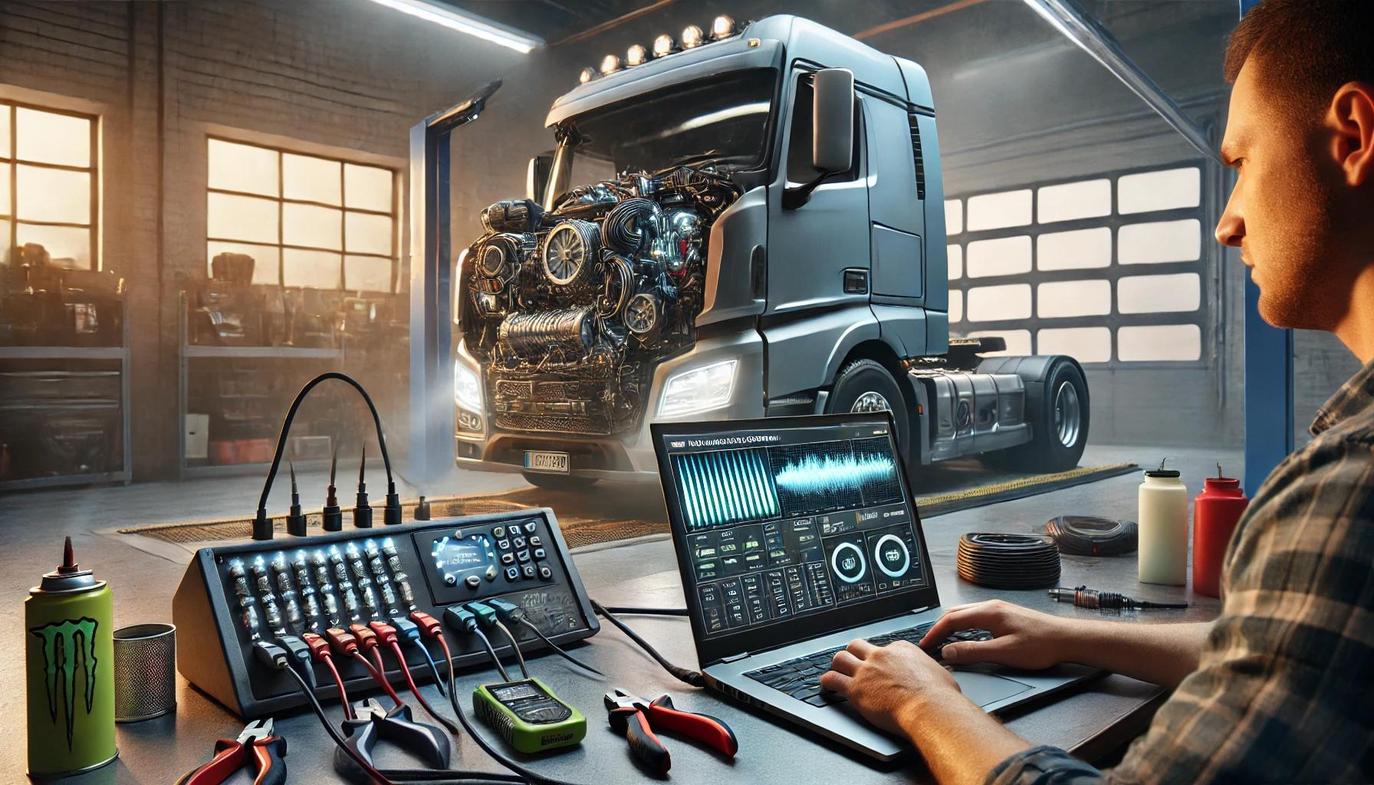
Diesel engines fifteen years ago ran pretty differently than what you see on the road now. The jump in emission standards has been relentless. Every few years another regulation tightens the screws on what manufacturers can actually do with their engines. Factory tuning today is strangled by compliance requirements that didn’t exist a decade back. Owners buy these trucks expecting power and towing capacity, but what they get out of the box is deliberately crippled. The engine sitting in your truck right now is capable of way more than the factory allows it to produce. That gap between potential and reality is where tuning lives.
The Factory Limitation Problem
Manufacturers aren’t evil. They’re constrained. EPA regulations dictate particulate matter, nitrogen oxides, and a whole list of emissions thresholds that get stricter every model year. Hitting those targets while also delivering fuel economy numbers for the sticker means conservative engine programming across the board. Warranty liability matters too. A diesel engine that goes 200,000 miles with factory programming looks good in court when something breaks. An engine pushed hard from day one gives lawyers heartburn. Then there’s the simple math of building one tune for millions of trucks sold across different climates, fuel qualities, and driving conditions. Factory settings need to work in Denver and in humid Georgia heat and everywhere in between. That means safety margins stacked on safety margins. The result is an engine that runs fine but nowhere near its ceiling.
How ECU Tuning Changes Engine Behavior
The ECU is basically a computer that controls every aspect of how the engine operates. Fuel injection timing. Boost pressure. Exhaust gas recirculation settings. Torque limiters that cap output artificially. Tuning modifies those parameters. More fuel injected per cycle means more combustion energy and more power. Adjusting when that fuel enters the cylinder changes efficiency and how the engine responds. Boost pressure gets increased, which means more air getting forced into the combustion chamber, which requires more fuel to match. The ECU can also adjust transmission shift points so gears hold longer under load. These aren’t random guesses. Professional tunes are built on dyno testing and years of engine data. The changes work together to reshape how the engine behaves at different RPM ranges and throttle positions.
Real-World Performance Gains
A stock 6.7 Powerstroke might put out 440 horsepower from the factory. A proper tune can push that to 550 or 580 depending on fuel quality and other modifications. Torque jumps from around 860 lb-ft to well over 1000. That’s not tiny. Throttle response gets noticeably sharper. You press the pedal and the engine responds immediately instead of the slight lag you get stock. Towing becomes a different animal. A truck that struggled at 65 mph loaded up a hill now cruises that same grade at 70 with half the engine strain. The transmission doesn’t hunt for gears constantly because the engine delivers torque more efficiently across the power band. Fuel economy under light load actually improves because the engine runs leaner when you’re just cruising. The gains depend on the specific tune profile and the engine, but these ranges represent what real owners experience, not marketing numbers.
The SCT X4 Tuner Advantage
The SCT x4 tuner became a reference point in diesel communities because it hands control to the owner. Not every truck owner wants mail-in tuning or dealer dependency. This device lets you swap between multiple tune files on your own. Economy mode for daily driving. Tow mode for hauling. Max performance when you want to feel what the engine can actually do. The flexibility matters because your needs change week to week. The interface is straightforward enough that non-technical people figure it out, but the software behind it reflects actual dyno work and real testing. Diesel guys talk about it constantly because it delivers what it promises without the black-box nonsense of some competitors.
Comparing Tuning Methods
Handheld tuners like the one mentioned cost more upfront but give you total control and no recurring fees. Mail-in tuning services are cheaper and convenient if you trust someone else to choose your tune file. You send data, they send back a file, you upload it. Custom dyno tunes are expensive but hyper-specific to your exact truck and modifications. You’re paying for personalization. Each approach trades something. Handheld tuners require you to buy the device outright. Mail-in tuning is faster if you’re in a hurry but inflexible if you change your mind about which tune profile you want. Dyno tuning takes time and money but guarantees the tune was validated on your specific combination of engine, fuel system, and modifications. There’s no objectively right answer. It depends on your budget, how much control you want, and whether you plan to modify the truck further down the road.
Safety and Engine Health Considerations
Tuning doesn’t inherently damage engines. A quality tune on a well-maintained truck causes no harm and can even extend engine life in some cases because efficient combustion creates less stress than factory programming. That’s the actual situation, not some reassurance. The real relationship is between tuning quality, maintenance discipline, and fuel quality. Skip oil changes or run cheap fuel and your engine dies faster whether it’s tuned or stock. Stick with the maintenance schedule, use decent diesel, and keep up with service intervals and tuning is just engine optimization. Many owners run tuned engines past 300,000 miles without catastrophic failures. Fuel system cleanliness becomes more important because a tune pushes the injectors harder and they become less forgiving of contaminants. Air filter changes matter more because you’re drawing more air. These aren’t dramatic changes to your life. They’re just the cost of running an engine at higher output. Nothing gets free energy.
Choosing the Right Tune Profile
Maximum performance and optimal performance aren’t the same thing. Maximum performance is what your engine can output on premium fuel in ideal conditions. Optimal performance is what makes sense for your specific driving. If you tow heavy loads regularly, a tow tune that prioritizes torque in the 1500 to 3000 RPM range works better than a top-end power tune that needs 4000 RPM to shine. If you mostly cruise highways, an economy tune that reduces fuel consumption makes more sense than a race tune you never actually use. Some owners run three different profiles and swap them depending on the week. Economy for Monday through Friday commuting. Tow mode when the trailer gets hooked up. Performance mode for weekend drives where you just want to feel the engine work. The flexibility of modern tuners means you don’t have to choose one setting and live with it forever. Pick what actually matches how you drive.
Integration With Vehicle Modifications
Tuning works inside a system. An intake system that flows more air pairs well with a tune that can use that extra air. An exhaust upgrade that reduces backpressure lets the tune push exhaust out more efficiently. A fuel system upgrade supports higher injection volumes. A turbo upgrade completely changes what the engine can do and requires tune adjustments to match. The synergies are real. A good tune on a modified truck amplifies the benefits of each modification. A tune on a stock truck still delivers gains, but less dramatic ones because the supporting systems are still factory-limited. The limitation goes both directions though. A tune can’t overcome a restrictive exhaust or a weak fuel system. If your truck has multiple modifications, the tune needs to account for all of them. This is where custom dyno work has an advantage over one-size-fits-all handheld profiles. But many people successfully run handheld tunes with modifications because the programmers built in headroom for that exact scenario.
Warranty and Legal Implications
Manufacturer warranty gets complicated with tuning. Most manufacturers void the powertrain warranty the moment they detect aftermarket tuning software. That’s the legal reality and it’s standard across the industry. Some extended warranty companies don’t care about tuning. Some do. You need to check your specific warranty documentation and contact your provider directly because blanket statements don’t apply to every situation. Regional emissions regulations vary wildly. Some states don’t test diesel trucks. Some states aggressively enforce emissions compliance. Federal regulations apply everywhere but state implementation is inconsistent. You need to verify what applies where you live because enforcement changes. Tuning that’s legal in Texas might violate regulations in California. This isn’t something to guess about. Look up your state’s specific testing and enforcement rules before you commit.
Making the Decision
Think through what you actually want from tuning before you buy anything. Do you want more power? Better fuel economy? Both? Different things require different tunes. Research the specific tune manufacturer and read actual owner feedback, not marketing claims. Watch real dyno numbers from independent shops, not company-produced videos. Check forums where owners discuss reliability over years of ownership. Calculate what the tuning setup costs and whether the benefits justify that investment for your use case. If you’re keeping the truck five years and towing half the time, the math differs from someone who drives light duty and trades in every three years. Look at your maintenance schedule and be honest about whether you’ll actually stick with it. Tuning requires discipline. Cheap fuel or neglected service intervals turn a smart modification into an expensive mistake. Ask yourself if you’re comfortable with voiding the manufacturer warranty. Some people don’t care. Some people need that protection. Know which one you are before you plug in the tuner.
Moving Forward
Diesel tuning is moving toward more integration with factory systems instead of against them. Manufacturers are getting slightly more aggressive from the factory but still leaving room on the table. The technology is becoming more sophisticated, which means smarter tunes that adapt in real-time instead of static maps. Handheld devices are getting more powerful. Mail-in services are getting faster. The gap between affordable tuning and custom work keeps shrinking. What’s guaranteed is that owners will keep pushing for more from their engines and manufacturers will keep trying to lock them down. That tension drives the tuning industry. The diesel community has moved past the days of thinking tuning is some risky hack. It’s legitimate engine optimization now, backed by thousands of hours of testing and millions of miles of real-world data.